United States Air Force
The HummingbirdThe United States Air Force enters the book’s meditation on vision as an institution whose history makes looking more than a passive act. The contrast between a bombardier watching the atomic explosion over Hiroshima and modern drones directed by algorithms turns the gaze into a question of responsibility: what changes when a person no longer has to look at what their actions do?
A gaze that implicates
The passage first treats identity and social exposure as effects of being seen. A man who has stopped beside a motorway to urinate turns his back on passing drivers, reducing the force of their gaze; from his perspective, that small change alters the encounter. The account then generalizes the point: seeing is not merely an event that happens to an observer but can make the observer involved in what is seen.
That argument frames the reference to the United States Air Force. Thomas Ferebee, identified as an American Air Force bombardier aboard the Enola Gay, relied on his eyes to determine when to release the atomic bomb on Hiroshima. His sight did not end with the release: moments later, he saw the mushroom cloud raised by the explosion. The sequence links visual perception to consequence, presenting the bombardier as implicated in what he witnessed.
From the bombardier to the drone
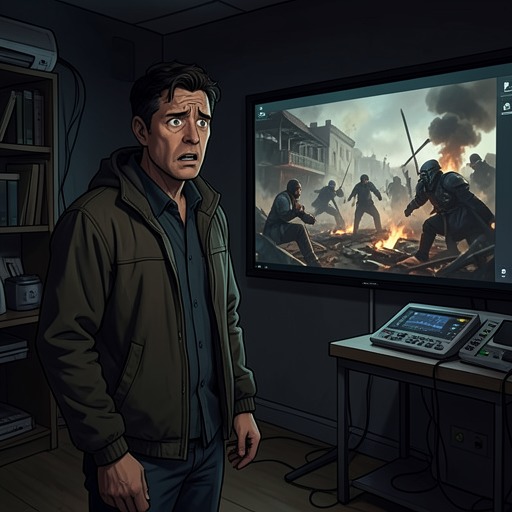
The passage sets Ferebee’s direct sight against the use of unmanned bombers, or drones, that drop bombs at the command of governing algorithms. In this contrast, the decisive change is not simply technological. The human eye that once registered both the target and the aftermath gives way to an automated command system, making it possible for those involved to act without directly looking at the effects.
The text draws an ethical consequence from that distance: without a direct look, nobody becomes involved and nobody is blamed. The statement is deliberately stark. The drone does not erase the act of bombing; it changes the relationship between action, perception, and accountability. The Air Force reference therefore anchors a broader claim about the gaze: seeing can bind an observer to what has happened, while mediated or absent sight can help responsibility recede.